
Membership Communities
Create free or paid memberships around an audience, mission, organization, expertise, or shared interest.
Applications Open: Bloomington, Indiana · August 24–28, 2026
View Upcoming Bootcamps →
An Exclusive Opportunity for Qualified Bootcamp Graduates
Certified Community Site Module Builders can take a useful platform idea, launch it as an independent software product, and adapt it into an approved add-on module that Community Site owners can activate inside their own communities.
The Community Site helps create distribution by introducing approved modules to a growing ecosystem of community owners, while the builder owns, operates, supports, and receives payment for the product.
Certification is earned through successful Bootcamp completion and demonstrated competency. Every module is separately reviewed and approved.
The Platform Behind the Module Opportunity
The Community Site is a multi-tenant SaaS platform that gives creators, entrepreneurs, educators, organizations, local leaders, and business owners the foundation to launch their own branded membership, community, and software experience.
Rather than every owner building an entire community platform from the ground up, The Community Site provides the shared core technology. Each owner can create their own community environment, serve their own audience, establish their own offers, and build a business within the larger platform.
The platform was created by Robert Evans, the leader of the Platform Builder Bootcamp, using the same AI-assisted development process, technology stack, architecture, and practical building methods taught during the training.
Multi-tenant means one central software platform can securely power many independently branded community sites and customer accounts.
Each Community Site owner can have their own members, branding, content, groups, programs, business model, settings, custom domain, and activated add-on modules—while the underlying software is centrally maintained and continuously improved.
Create free or paid memberships around an audience, mission, organization, expertise, or shared interest.
Deliver courses, content, coaching, resources, AI experiences, events, and premium member access.
Connect residents, businesses, organizations, events, resources, and local opportunities.
Build associations, directories, member groups, training environments, and specialized professional ecosystems.
Create customer education, loyalty, support, onboarding, collaboration, and recurring-value experiences.
Combine community features with modules, workflows, tools, subscriptions, and industry-specific software.
The core platform is designed to provide the shared features most communities need. But every industry, business model, audience, and organization has specialized needs that should not all be forced into the core software.
Add-on modules allow Community Site owners to activate advanced functionality only when it is relevant to their community.
The core platform creates the community environment. Add-on modules create specialized products, business models, and member experiences inside that environment.
The Community Site was intentionally designed so its growing network of community owners would not rely only on modules created internally. Qualified Platform Builder Bootcamp graduates can create their own valuable software products and adapt appropriate products into approved Community Site modules.
This means a builder can create a standalone SaaS platform for their own market while also preparing a version that plugs into The Community Site and becomes available to community owners who need that functionality.
The Community Site helps approved builders by providing access to a relevant customer ecosystem, Module Library placement, platform education, and promotional opportunities. The builder owns, operates, supports, and receives payment directly for the partner module.
The Community Site does not guarantee module approval, customers, adoption, or income. It creates a structured opportunity for qualified builders to bring useful software into an existing and growing platform ecosystem.
The Community Site
Central multi-tenant SaaS platform
↓
Community Owner A
Membership community
Community Owner B
Local community platform
Community Owner C
Professional network
Community Owner D
Creator or education platform
↓
Approved Modules
Community owners activate only the modules that fit their audience and business model.
The Community Site provides the platform. Community owners provide the audiences. Certified Module Builders can provide the specialized software that helps those communities do more.
That combination creates an ecosystem where builders are not only learning how to create software—they are gaining a pathway to distribute and monetize software inside a real SaaS platform.
From Custom Projects to Repeatable Products
Traditional custom development often means finding a client, building one solution, getting paid once, and then searching for the next project. A module solves a repeatable problem shared by many community owners.
A well-designed module gives one product the potential to serve many customers.
A Specialized Add-On Application
A Community Site module is a specialized software application that adds a new business model, workflow, member experience, or advanced capability to The Community Site.
The core platform provides the universal community experience. Modules allow individual community owners to activate specialized functionality based on their audience, organization, industry, or business model.
Core features improve the platform for everyone. Modules solve specialized problems for communities that need them.
A More Powerful Product Strategy
You do not have to choose between building your own software company and creating a Community Site module. A properly designed application may be able to do both.
Your Core Software Product
Branch 1
Branch 2
Recurring Customer Revenue
The strongest products may be able to serve an independent market while also meeting a repeatable need inside The Community Site.
A Relevant Market From the Beginning
Most new software founders face two difficult challenges: building the product and finding people who might pay for it. The Module Builder opportunity helps reduce the second challenge by giving approved products access to a defined ecosystem of community owners.
The Community Site cannot guarantee customers or sales. It can give approved builders something many first-time software founders do not have: a relevant marketplace and an existing customer ecosystem that is actively looking for ways to improve, specialize, and monetize community platforms.
Develop around problems already shared by community owners rather than beginning with a completely unknown market.
Approved modules can become discoverable to Community Site owners through the Module Library and platform education.
Serve multiple module customers through one maintained product rather than starting every engagement from zero.
You Build and Operate the Product
The Community Site will help participating owners discover and understand approved modules. Promotional opportunities will depend on module quality, relevance, adoption, customer feedback, and current platform priorities.
The Community Site benefits when strong modules help community owners succeed, so the ecosystem is designed to align the platform, builder, and customer.
Operate Your Own Software Business
You are not simply licensing an idea to The Community Site. You are building and operating your own software product inside an approved distribution ecosystem.
A Builder-First Launch Model
Certified builders retain 100% of qualifying Community Site module revenue until they have generated their first $5,000—the current tuition for the Platform Builder Bootcamp.
Illustrative structure only
At 100 active customers paying $50 per month, a module would generate $5,000 in monthly gross subscription revenue.
These figures demonstrate the pricing and revenue structure only. They are not guarantees of certification, module approval, customers, subscriptions, retention, or financial performance.
An Aligned Ecosystem
After the builder’s first $5,000 in qualifying module revenue, The Community Site receives 25% to support the infrastructure, access, administration, and distribution that make the ecosystem possible.
The model is aligned: The Community Site earns more only when the Module Builder earns more.
A Limited Group of Approved Builders
Certification is permission to build for a controlled software ecosystem. It identifies builders who have demonstrated that they can plan, build, test, deploy, support, and maintain software according to Community Site standards.
Bootcamp attendance alone does not guarantee certification, and certification does not guarantee that a specific module will be approved.
Connected Without Giving Up Ownership
Partner modules are independently operated applications that connect to The Community Site through approved authentication, APIs, permissions, and design standards.
The builder owns and operates the product. The Community Site controls whether, where, and for whom that product is authorized to operate within the ecosystem.
Standards That Protect Builders and Customers
These standards protect customer data, strengthen confidence in the Module Library, and prevent one poorly maintained product from damaging the broader ecosystem.
Proof of the Model
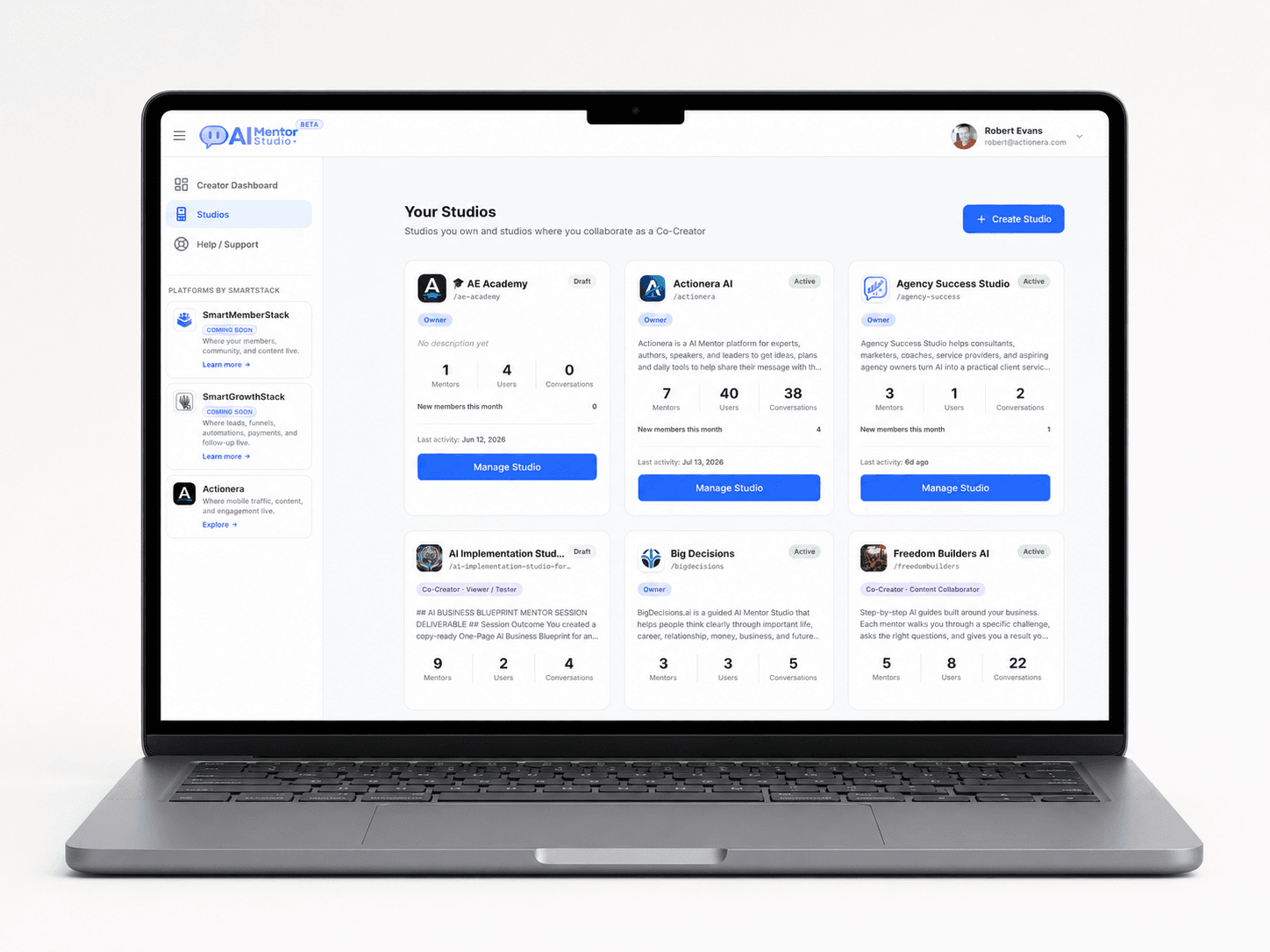
The AI Mentor Module allows community owners to offer guided AI mentor experiences to their members. It can support onboarding, business coaching, wellness guidance, training, action planning, and expert knowledge delivery.
Standalone connection: The same underlying technology also powers AI Mentor Studio, an independent SaaS platform where businesses and creators can build their own branded AI mentor experiences.
One technology system can power both an independent SaaS platform and an integrated Community Site module.
Premium Business Profiles give businesses an advanced presence inside a community through products, services, deals, events, content, followers, messaging, and community-centered business features.
Standalone connection: The same architecture can operate as an independent business-directory platform for cities, chambers, associations, local publishers, and industry networks.
A Community Site module can also become a complete standalone product for a separate market.
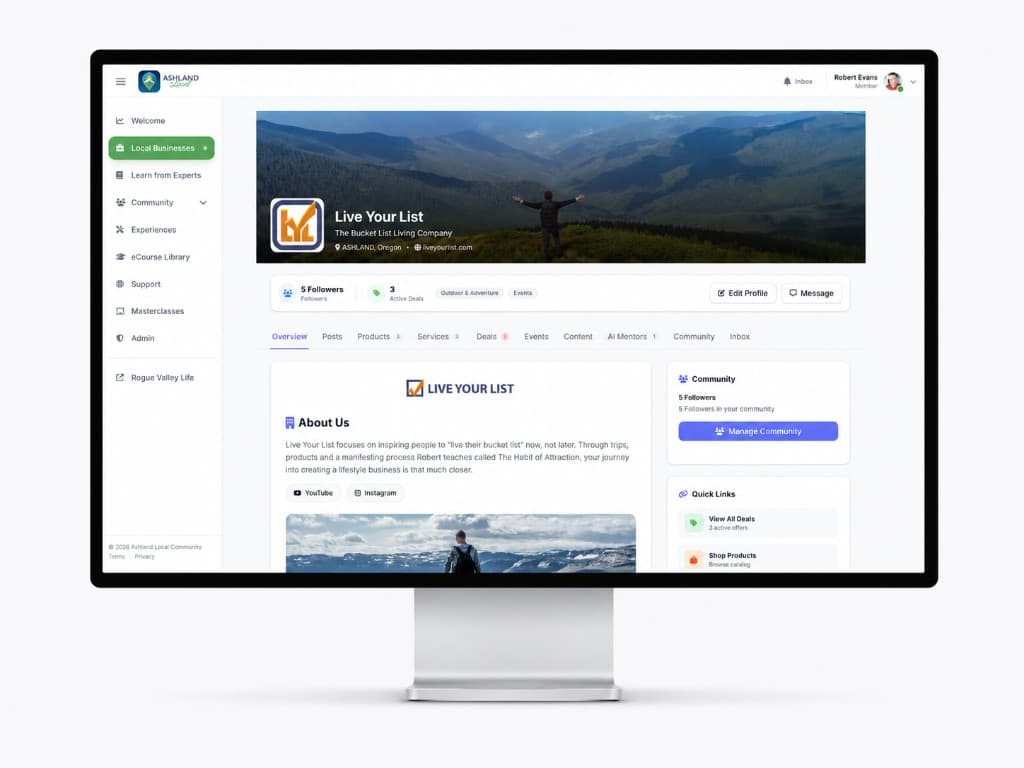
TrackaCards is planned as a flexible system for tracking goals, activities, progress, campaigns, challenges, and structured member actions.
Standalone connection: The same product concept could become an independent accountability, implementation, or performance-tracking SaaS platform.
A strong module begins with one repeatable problem and a flexible product architecture.
What Could You Create?
From Interesting Idea to Valuable Product
The best module ideas are not merely interesting. They solve a painful problem well enough that multiple community owners are willing to pay for them every month.
Evaluate the Opportunity
Do multiple community owners share this problem?
Would the solution create or save meaningful money, time, or effort?
Is it specialized enough to be an add-on rather than a core feature?
Can it be configured for many different communities?
Would customers reasonably pay monthly or annually for it?
Could it also serve a market outside The Community Site?
The more strongly an idea answers yes to these questions, the more likely it is to support both a valuable module and a standalone software opportunity.
From Bootcamp Idea to Module Library
Complete the Platform Builder Bootcamp.
Show that you can plan, build, test, and deploy according to the standards.
Become a Certified Community Site Module Builder.
Choose a repeatable problem and define the product architecture.
Create the independently hosted application.
Connect approved authentication, permissions, APIs, and design standards.
Complete technical, security, usability, and business review.
Test the product with a controlled group of users.
Make the approved module available to Community Site owners.
Improve the application, support customers, and build adoption.
A Real Software Business Opportunity
This opportunity is not passive. The builder remains responsible for operating a dependable software product and serving the customers who pay for it.
The Community Site helps create access and distribution. The builder remains responsible for delivering value.
Builders must provide reasonable notice before discontinuing a module and follow established customer communication, data export, and transition requirements.
Clear Answers
A Community Site module is a specialized software application that adds a new business model, workflow, member experience, or advanced capability to The Community Site. Community owners can activate approved modules based on their audience, organization, industry, or business model.
No. The Bootcamp teaches a transferable platform-building skill you can use for your own products, client work, websites, internal systems, and other software. Building Community Site modules is an exclusive pathway available to certified builders, not a requirement.
Yes. When designed correctly, one underlying product can operate as an independently branded SaaS platform and also as an approved Community Site module. That dual-market approach is one of the strongest parts of the Module Builder opportunity.
You build and operate your own software product. You retain ownership of your application while The Community Site controls whether, where, and for whom that product is authorized to operate inside the ecosystem.
Module customers subscribe directly to you. You receive customer subscription revenue through your own billing account.
No. For partner modules, The Community Site is not the merchant of record. Customers pay the builder directly, and the builder remains responsible for billing operations.
The builder handles refunds, cancellations, and module-specific customer support according to their own policies and platform standards.
Certified builders retain 100% of qualifying Community Site module revenue until they have generated their first $5,000—the current tuition for the Platform Builder Bootcamp. This applies to qualifying module revenue and is not a guarantee of sales.
After that threshold, the builder retains 75% and The Community Site receives 25% of qualifying module revenue. The platform share supports infrastructure, authorization, distribution, and ecosystem administration.
No. Certification identifies builders who have demonstrated competency. Every individual module is separately reviewed for technical, security, usability, and business standards before it can enter the Module Library.
No. Approval makes a module eligible for distribution inside the ecosystem. Customer adoption depends on product quality, pricing, relevance, support, promotion fit, and market demand.
Promotional opportunities may include Module Library placement, education, announcements, recommendations, and other channels. Exact promotion depends on module quality, relevance, adoption, customer feedback, and current platform priorities. Not every module receives every promotional channel.
Yes. Certified builders may develop and submit multiple modules over time. Each module is reviewed separately.
Yes. A properly designed application may serve an independent market under your own brand while also operating as an approved Community Site module.
The builder hosts and maintains the application. Partner modules are independently operated products that connect through approved authentication, APIs, and design standards.
The builder provides module-specific support. The Community Site helps create access and distribution, while the builder remains responsible for delivering product value.
You are responsible for uptime, maintenance, security updates, and resolving product issues. Repeatedly failing important standards can affect module authorization and, in serious cases, certification status.
Yes. Certification can be suspended or revoked when important standards are repeatedly violated, protecting customers and the broader ecosystem.
Builders set pricing for their products based on value, market, and positioning, while following any applicable ecosystem guidelines. Pricing should support a clear monthly or annual subscription model where appropriate.
Modules must meet standards for security, tenant separation, privacy, performance, accessibility, support readiness, documentation, compatibility, and related quality requirements. These protect customers and strengthen confidence in the Module Library.
Builders must provide reasonable notice before discontinuing a module and follow established customer communication, data export, and transition requirements so customers are not left without a fair path forward.
The Platform Builder Bootcamp Is the Entry Point
Learn a skill you can use across your own products, client work, websites, internal business systems, and new ideas. Then demonstrate your competency and become eligible to build recurring-revenue modules for The Community Site.
Certification, module approval, customer adoption, and financial results are not guaranteed.